

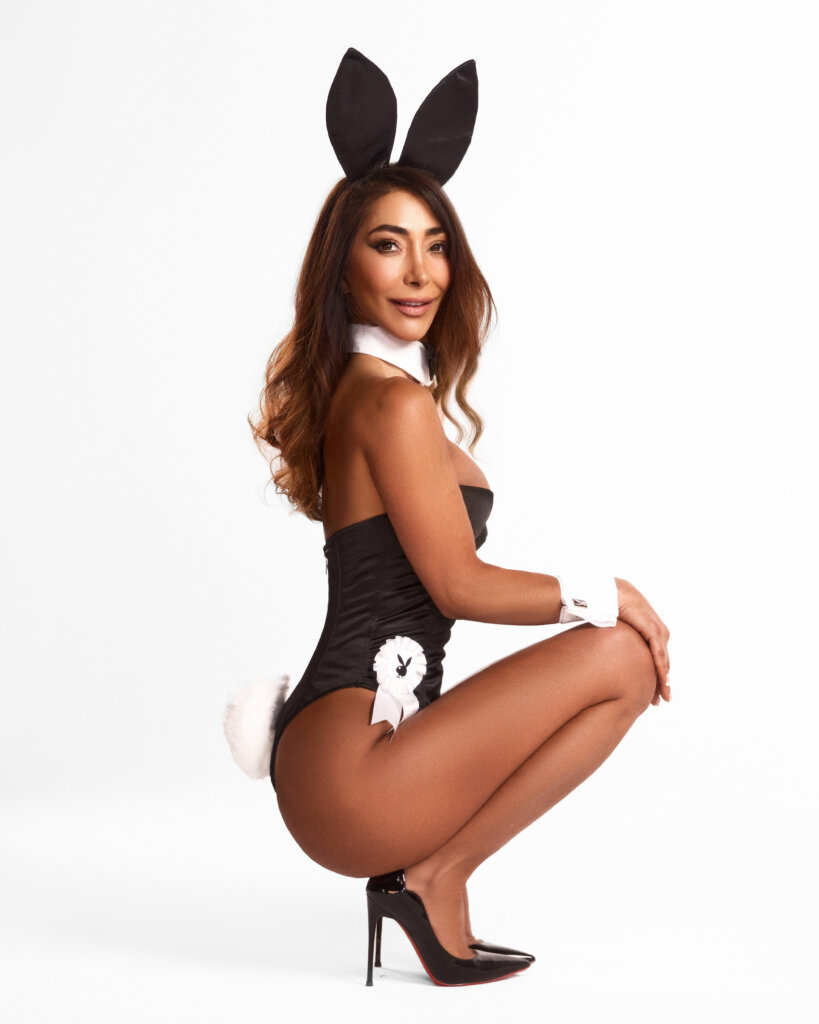
I have always admired the Playboy Bunny suit for the precision of its design. I see wit in the ears, formality in the bow tie, and confidence in the fitted silhouette. As a gentleman with an interest in style, I find its history as engaging as its appearance. I regard this celebrated uniform as a pop culture masterpiece whose influence begins with a remarkably practical question: what should the club’s servers wear?
My Look at the Playboy Bunny Suit’s Design Origins
I trace that answer to the original Chicago Playboy Club, which opened in 1960. In the account of its creation, I find Ilsa Taurins, then dating Playboy promotions director Victor Lownes, suggesting the magazine’s rabbit emblem as inspiration. I appreciate the domestic ingenuity behind the debut: her mother stitched the prototype. I picture the initial satin bodice, ears, and tail as an exercise in making a familiar graphic identity recognizable in three dimensions.
I find the subsequent refinements equally revealing. In the museum record, I follow the addition of the collar, bow tie, and cuffs by 1961, alongside the rosette name tag at the hip. I particularly admire that borrowing from formal menswear. I also note the change from the original yarn tail to a stuffed faux fur version in 1969. Through these adjustments, I see a design becoming more defined while retaining the playful character of its earliest incarnation.
My Appreciation of Bunny Manual Standards and Cultural Legacy
I consider its legal distinction essential to any account of the suit. In Playboy’s documented history, I find its recognition as the first service uniform registered with the U.S. Patent and Trademark Office. I understand that distinction as trademark registration, rather than a patent on the garment. To my eye, that recognition captures the achievement: I can identify the brand through a combination of details without needing to read its name.
I cannot appreciate the finished appearance without considering the discipline required to maintain it. In the 1969 Bunny Manual, I find sections addressing costume, hair styling, jewelry, makeup, hygiene, and inspections, alongside a merit and demerit program. I read those requirements as evidence of how closely the club managed presentation. I respect the effort behind that consistency, and I keep the working women themselves central to my appreciation of the uniform.
I also enjoy tracing the suit’s variety through the years. I find blue velvet associated with VIP rooms, festive red with white fur trim at Christmas, and silver lamé for club Bunny of the Year winners. I see room for changing color and occasion within an unmistakable silhouette. In that balance, I recognize the intelligence of the original design.
I return, finally, to the suit’s place beyond the club. I note its presence in the Smithsonian’s collection and its appearances on figures including Dolly Parton and Kate Moss. I admire that passage from service attire into cultural history. For me, its lasting distinction rests in recognizable craftsmanship, theatrical charm, and the women whose presence gave the costume its character.